June and July are too hot for gardening in a small west-facing garden with little shade. This year has been particularly hot and extremely dry from early spring. The roses and other early-flowering plants have gone over quickly, leaving tired, dry leaves behind, and nothing seems to be in a hurry to replace them. This last week it has been windy, which has battered some of the taller perennials and knocked over the allium skeletons so that they no longer look attractive. My time in the garden has been spent cutting back and tying up and hoping for some serious rain.
One job I completed a few weeks ago was the trimming of my little box hedges. These were formed from two clipped box balls and a number of smaller box plants sold for hedging which I planted about five years ago. I aim for an informal effect, retaining the natural curves of the plans, rather than straight lines. This is how the hedges looked before I started clipping:
And this is the result of an hour in the sunshine with a pair of secateurs:
I quite like the irregularity of the two shapes and the fact that there are two types of box, with slightly different shades of green.
Other work has included the dead-heading of all the roses, and cutting back those branches which had grown too far away from the support. Most of the roses will have a second flush of flowers and will continue to flower until about November.
Taking all the self-sown poppies and aquilegias out of the bed on the left of the garden, and cutting back the other perennials has left a fair amount of bare soil to be filled. Fortunately, a trip to Hampton Court Flower Show produced a small number of suitable impulse buys to fill the gaps. I have planted three Helenium "Moerheim Beauty", which have orange daisy-like flowers in late summer, and a potentilla "Arc en Ciel" which has red flowers edged with a touch of gold.
I was delighted to see another of my wild flowers blooming -Centaurea Scabiosa (Greater Knapweed). It is quite a small flower, and much more delicate and attractive than its larger garden versions:
The allium sphaerocephalon are in full bloom now. These are small round flower heads on long thin stems. As the flower heads grow bigger, the stems start to bend and sag in a very informal manner.
The flowers also attract a lot of bees, particularly these little bumblebees with orange tails:
One plant which I have retained despite its obvious deterioration is the angelica. This has finished flowering and is producing its seeds. It has been attacked by blackfly aided and abetted by ants which farm them for their honeydew. This in turn has resulted in an infestation of ladybirds and their larvae, which feed on the aphids. With all this frenzied activity, I haven't the heart to take the angelica out just yet. The garden will benefit from the increased ladybird population.
Another predator of aphids is the hoverfly. Here is a picture of one on the oxeye daisy.
Also performing well this month is the trachelospermum jasminoides, which survived the cold weather much better than I expected given its reputation for being tender. It fills the garden with a sweet jasmine scent.
Sunday, 18 July 2010
Saturday, 26 June 2010
June Catch-up
I've been busy doing other things, such as bird watching and going on holiday, and now I find that I haven't posted for most of June, when the garden has been at its peak, with all the roses having their first flush, and many other perennials coming into flower too.
The irises in pots came out very shortly after I potted them up, and looked very pretty:
The roses were equally beautiful:
I am particularly pleased that the last rose pictured - Corvedale - flowered well this year. It was planted two years ago, but has been slow to establish itself.
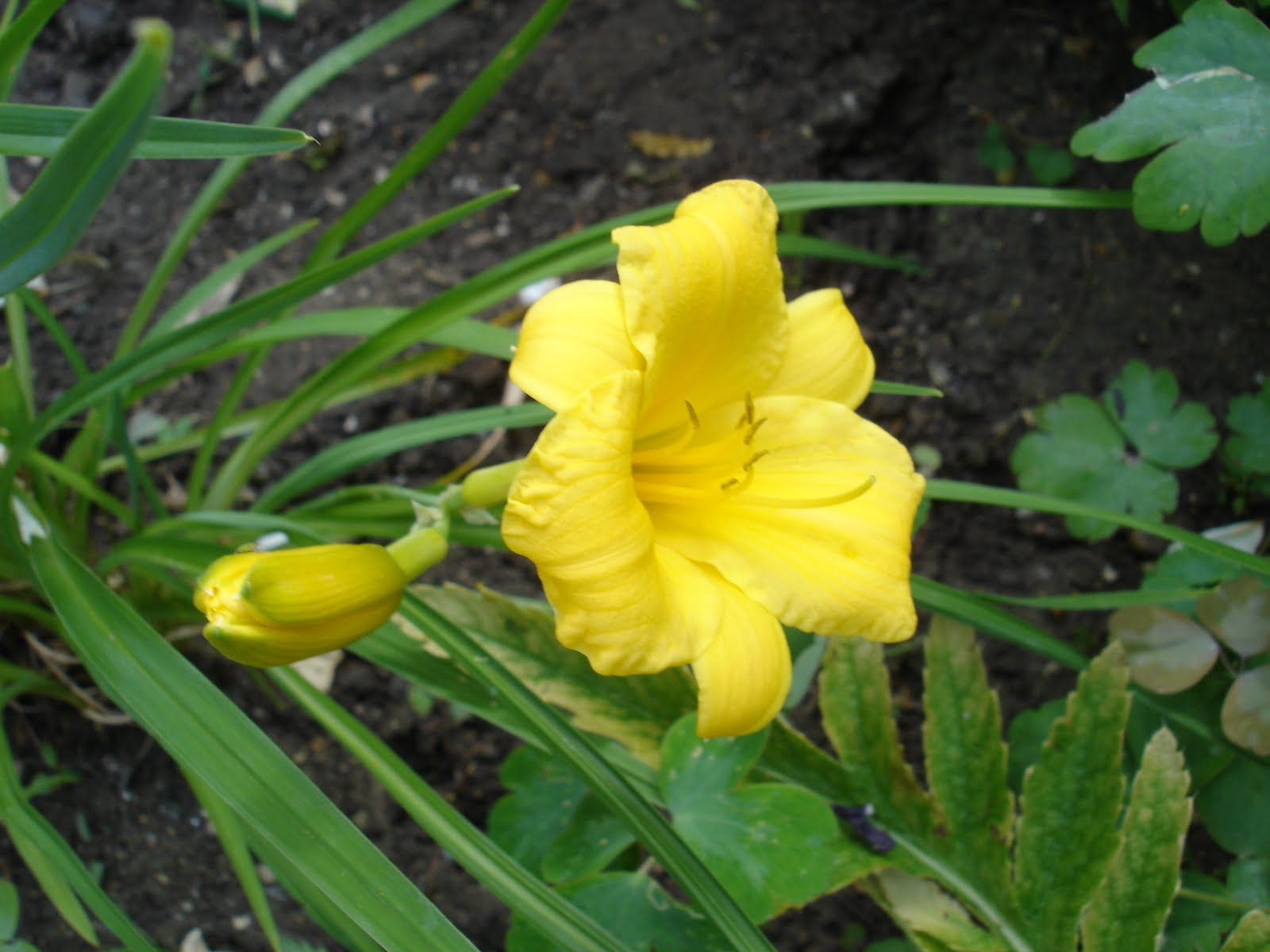
I was also pleased that the dwarf hemerocallis, which I divided and planted in March, has produced some flowers - not many, but at least all three pants are thriving, and hopefully there will be more flowers next year.
Also in March, I planted two oriental poppies "Beauty of Livermere" and these are now producing buds. One has fully opened and is stunning:
Also new this year, the anthemis tinctoria "E.C. Buxton" has flowered, and is supporting the sweet pea "Matucana" which is growing forward. This wasn't planned, but is an interesting combination. I have added some support to stop the two plants falling too far.
Some old favourites come up every year, and are always welcome. This pink geranium is a little too enthusiastic for the available space and I may move it in the autumn.
This penstemon "Sour Grapes" is also enthusiastic, but is very pretty and long-flowering, so worth the space.
This alchemilla mollis edging was originally one plant, which failed to thrive in the front garden. I moved it, split it into small sections and planted it at the edge of the paving, in front of the slightly raised bed containing the ponds. It covers the unattractive edging and looks fantastic for most of the summer.
The stipa gigantea is at its best and looks fantastic as it catches the evening sunlight
And finally, here is a view of the whole garden, through the rose arch:
Tuesday, 1 June 2010
Wildflowers and some Chelsea Inspiration
I've been planting weeds over the bank holiday weekend. I was inspired by a day bird watching at the Wetland Centre in Barnes which celebrated its 10th anniversary last week. The Wetland Centre is an artificial, managed landscape, created from a disused reservoir. It is the ultimate wildlife garden, containing a wide variety of native trees, shrubs and flowers supporting a variety of birds, mammals and insects. I couldn't resist buying some of these wild flowers from the gift shop on my way out.
I have two small ponds in my garden, made from plastic bowls 2ft in diameter, placed next to each other. The surrounding area is rather poor sandy soil and I haven't established any long-term planting there. Last summer, I planted some grasses - pieces of Panicum Virgatum "Hanse Herms" - which I had divided from a larger clump. These have survived, but need time to thicken up. The other perennials I planted there last summer have failed to thrive and been eaten by slugs, leaving gaps. I have placed my wild flowers in these gaps, since they should thrive in the poorer soil, and will look good among the grasses. I have planted Leucanthemum Vulgare (Oxeye Daisy), Achillea Millefolium (Yarrow) Centaurea Scabiosa (Greater Knapweed) and Tanacetum Vulgare (Tansy). I'm looking forward to seeing how they grow. They join the self-seeded poppies and campanula to make a very natural corner.
Last Tuesday I went to the Chelsea Flower Show. I go every year and always come back with lots of ideas to try. This year it was the three large bowls of irises on Andy Sturgeon's "Best in Show" garden which caught my eye. His irises looked like this:
I went to the garden centre and bought some irises and put them in pots. Mine look like this:
I think they will look better when the buds open.
Saturday, 22 May 2010
Pests!
There's not much to do now that the warmer weather is here, other than a little light weeding. One constant job is keeping an eye out for pests. I try to garden organically, so avoid using sprays. Most pests have a natural predator, and they usually turn up before the infestation gets too bad.
I always have greenfly on my roses, but it is a joy to see the blue tits, coal tits and sparrows hopping around cleaning them off, and taking them to feed their chicks. What they don't find gets eaten by the ladybirds and their larvae. The roses are usually clear of aphids by the time the buds open.
Another regular pest is the lily beetle. These are bright red and oblong and seek out lilies and fritillaries. Their larvae are slimy little blobs that look like bird droppings, and they can strip a lily of its leaves in no time. The best control is to patrol the lilies regularly and pick off the beetles before they get a chance to mate and lay eggs. Their bright colour makes them easy to spot from a distance. Their main defence is to drop to the ground on their backs, exposing their black bellies, which makes them difficult to find on the soil. If you put one hand underneath them, before knocking them off with the other, they are easy to catch as they fall. Then I drop them on the paving slabs and squash them with my foot. These beetles have arrived recently from continental Europe, and as far as I know have no natural predators in the UK, apart from gardeners.
Slugs and snails are always a problem in my garden and I have found nothing that works effectively to eradicate them. Some of them get eaten by the frogs and birds, but there are simply too many to control completely. My main defence is to buy things they don't like eating - hairy plants like alchemilla mollis, sappy plants like euphorbia, and grasses, lavender and box. This year, I have managed to establish some fennel plants, which usually fall prey to slugs, and there are considerably fewer signs of slug damage than usual. I assume this must be due to the cold winter and cool dry spring. One plant that has fallen victim to the slugs is my sunflower. From my sowing in March, I had one seedling which avoided being slugged in its pot and grew to about 10 inches high. As soon as I planted it out, it was reduced to 5 inches high, and it has now disappeared completely.
On a more positive note, the garden is now looking good with the borders filling out. The alium hollandicum "Purple Sensation" has taken over from the tulips to add a bright burst of colour into the borders. They cover a gap before the roses bloom in June.
I always have greenfly on my roses, but it is a joy to see the blue tits, coal tits and sparrows hopping around cleaning them off, and taking them to feed their chicks. What they don't find gets eaten by the ladybirds and their larvae. The roses are usually clear of aphids by the time the buds open.
One pest which is a nuisance is the scale insect, which arrives on my Japanese maples each spring. They have a protective outer "shell" and seal themselves in with a sticky white substance. They look like this:
Nothing seems to eat them, and if left they can kill the trees. They are easily controlled in the early stages by wiping them off with a tissue and squashing them.
Another regular pest is the lily beetle. These are bright red and oblong and seek out lilies and fritillaries. Their larvae are slimy little blobs that look like bird droppings, and they can strip a lily of its leaves in no time. The best control is to patrol the lilies regularly and pick off the beetles before they get a chance to mate and lay eggs. Their bright colour makes them easy to spot from a distance. Their main defence is to drop to the ground on their backs, exposing their black bellies, which makes them difficult to find on the soil. If you put one hand underneath them, before knocking them off with the other, they are easy to catch as they fall. Then I drop them on the paving slabs and squash them with my foot. These beetles have arrived recently from continental Europe, and as far as I know have no natural predators in the UK, apart from gardeners.
Slugs and snails are always a problem in my garden and I have found nothing that works effectively to eradicate them. Some of them get eaten by the frogs and birds, but there are simply too many to control completely. My main defence is to buy things they don't like eating - hairy plants like alchemilla mollis, sappy plants like euphorbia, and grasses, lavender and box. This year, I have managed to establish some fennel plants, which usually fall prey to slugs, and there are considerably fewer signs of slug damage than usual. I assume this must be due to the cold winter and cool dry spring. One plant that has fallen victim to the slugs is my sunflower. From my sowing in March, I had one seedling which avoided being slugged in its pot and grew to about 10 inches high. As soon as I planted it out, it was reduced to 5 inches high, and it has now disappeared completely.
On a more positive note, the garden is now looking good with the borders filling out. The alium hollandicum "Purple Sensation" has taken over from the tulips to add a bright burst of colour into the borders. They cover a gap before the roses bloom in June.
Sunday, 9 May 2010
Darling Buds of May
The last two weekends have seen a return to cool breezy weather and showers or persistent rain - not very pleasant for gardening so I haven't done much. Instead I've been out and about, and in my travels I have acquired several plants to fill in gaps in the planting.
From a trip to Polesden Lacey, I acquired a Thalictrum "Black Stockings", which has tall dark stems and lilac fluffy flowers. I have planted this in the shady border under the trees. It isn't open yet but here it is in bud:
A walk to Petersham Nurseries produced two more new plants. The first was Anthemis Tinctoria "E. C. Buxton", also known as "Golden Marguerite". It has pale yellow, daisy-like flowers and I have planted it in the border on the left, which I am developing into a white, yellow, orange and red border (with a small amount of purple for contrast). The second plant was a Salvia Nemerosa Tanzerin, which has spears of purple & blue flowers. I have planted this next to the deep pink "Gertrude Jekyll" rose which grows up an obelisk in the bed on the right.
This year has been a good year for my apple blossom, which seems to have lapsed into a two-year cycle, with alternating good and bad years. In a good year the blossom looks like this:
A fortnight ago, I blogged that my New Zealand tree fern was starting into growth. The emerging frond has now started to unfurl, and now looks like this:
My Vitis Coignetiae is also in flower. This is not spectacular, because the flowers are very small and green, but I like them anyway.
Also in flower now is a little wild welsh poppy which I introduced to my garden from seed collected in a friend's garden where it grows as a weed. This has seeded itself into many gaps in the borders and in the gravel round the sundial. I like the relaxed effect of self-seeding plants.
And finally, here is a view of my garden from my bedroom window.
Sunday, 25 April 2010
What a difference a fortnight makes!
Today, I went out into the garden to plant some plants I had purchased last week "to fill the gaps" The only trouble was, nature had already done the job and some of the gaps no longer existed! April is always a fast-growing month, particularly this year, with the cold snap being followed by sustained fine weather. This is a view of the garden today - showing how much fuller the garden is now.
I managed to fit my new purchases in somehow. I put some orange Imperial Fritillaries at the back of the left-hand border, near the bright yellow euphorbia. They match the orange in the tulips and the euphorbia "Dixter" which is also in flower, and the orange in the emerging Japanese maple tree leaves. I am aiming for a bright spring garden, full of yellows and oranges which look good in the spring sunshine. These are the fritillaries in their pots before I planted them.
And these are the euphorbia "Dixter"and the maple tree leaves:
I planted a fancy blue anemone nemerosa robinsoniana in the woodland border near the rose arch at the back of the garden
I also did some "editing", moving a verbascum and a sedum which were being swamped by their neighbours, and some weeding.
My sweet peas, sown in March, had grown quite well, although the ones in the John Innes seed compost did better than the ones in the Westland multi-purpose peat-free compost. I decided to plant them out in the left-hand border, using some home-made compost to improve the soil first. These are the seedlings in the pots:
And these are the seedlings in the ground (with the new fritillaries on the right of the picture):
There were a couple of surprises at the bottom of my garden in the shady corner under the trees. The first was the discovery of a clematis growing strongly next to the apple tree. It had started life in a large pot but didn't thrive, so I planted it next to the apple tree, hoping it would grow through the tree. It struggled for two years, never flowered, and I thought it had died. In fact it has started to re-grow, so I have put in some bamboo sticks to support it and guide it towards the tree.
The other surprise was finding that my New Zealand tree fern was still alive. It is supposed to be tender, and since I didn't wrap it up I feared it would have been killed by all the frost and snow in January. I had a good look at it today, and found new fronds curled up ready to grow. They are covered on hairs.
Two of my clematis are in flower now - not as many flowers as I expected, but at least they have survived their first year in the ground. This is clematis alpina "Columbine"
And this is clematis alpina "Helsingborg" (with a nice view of the tulips behind) The colour is a deeper purple than the picture shows.
I'll finish with some tulip pictures:
Subscribe to:
Posts (Atom)